The Hope for Haiti Now telethon has just ended, but you can click here to go to their site.
Red Cross has a list of several official ways to donate including a list of the official walk-in sites. Click here for the Red Cross page.
Thanks!
Friday, January 22, 2010


Monday, January 18, 2010
Saturday, January 16, 2010
How Green Is Your Garden? - National Wildlife Magazine

This is a great article and I initially posted it here as a draft so I could refer to it. Then I figured I should share it since there are so many good tips for "greening" your yard. I hope it can be of help to you! Let me know if it was, leave a comment!
Monday, January 11, 2010
Experiment in climate control
Update: Jan. 10, 2010
I just got December's electric bill and it's only 117! That's the lowest ever. I have to enjoy it, since I know with this cold spell, it will be much higher for January! However, there are some other new tricks this year that should help. For one, all my electronics are on surge protectors so I turn everything off with one switch for groups like computer/external drive/printer or TV/cable box/DVD player. Lights that were on timers are now on a remote system so I can still have light as I walk into a room, but now it doesn't have to be on for long stretches. I've also started doing all my laundry in cold water. Using white vinegar in the fabric softener dispenser has really worked to make the clothes feel soft and smell nice! My gas bill has seen a drop from $80 to $50 per month on average. Other things this year that weren't up last year are the weather stripping on the back door, and insulating drapes up on all windows and doors. I've still got the safe space heater which I carry from room to room. It's made a huge difference. With the upstairs heat set at 58, my room is around 64! It is a newer model that does have the auto shut off feature in case it is knocked over. It also has what it calls its "eco" option which sets it to turn off automatically in three hours. These are good safety features and I can't stress this kind of thing enough when it comes to space heaters! They are a major cause of house fires in the cold months! But used with care, it sure helps save energy!
So the experiment continues! How are you coping with this rough winter? Any tips for saving electricity? Please share them!
Previous logs of my electric experiment!
June 5, 2009 - update:
The A/C guy fixed my downstairs unit - seems a transformer needed replacement. It was only $84, so pretty good there. But now that I'm used to the warmer temps, I'm setting my downstairs unit on 85, with the fan running continuously. My electric bill with only one unit running has gotten below the $180 per month mark. We'll see what it goes up to now. Usually I use the upstairs unit more in the summer - cold air drops, and my bedroom is where I need the most cooling comfort anyway. In the winter, I use the downstairs unit most, since the warm air rises and I use my space heater sparingly. This month's electric bill was $169. That's for 3700+ square feet! When I moved here the electric bill was hovering around the $500/month mark!
And the experiment continues!
Sunday, May 10, 2009 at 10:18am
I just got December's electric bill and it's only 117! That's the lowest ever. I have to enjoy it, since I know with this cold spell, it will be much higher for January! However, there are some other new tricks this year that should help. For one, all my electronics are on surge protectors so I turn everything off with one switch for groups like computer/external drive/printer or TV/cable box/DVD player. Lights that were on timers are now on a remote system so I can still have light as I walk into a room, but now it doesn't have to be on for long stretches. I've also started doing all my laundry in cold water. Using white vinegar in the fabric softener dispenser has really worked to make the clothes feel soft and smell nice! My gas bill has seen a drop from $80 to $50 per month on average. Other things this year that weren't up last year are the weather stripping on the back door, and insulating drapes up on all windows and doors. I've still got the safe space heater which I carry from room to room. It's made a huge difference. With the upstairs heat set at 58, my room is around 64! It is a newer model that does have the auto shut off feature in case it is knocked over. It also has what it calls its "eco" option which sets it to turn off automatically in three hours. These are good safety features and I can't stress this kind of thing enough when it comes to space heaters! They are a major cause of house fires in the cold months! But used with care, it sure helps save energy!
So the experiment continues! How are you coping with this rough winter? Any tips for saving electricity? Please share them!
Previous logs of my electric experiment!
June 5, 2009 - update:
The A/C guy fixed my downstairs unit - seems a transformer needed replacement. It was only $84, so pretty good there. But now that I'm used to the warmer temps, I'm setting my downstairs unit on 85, with the fan running continuously. My electric bill with only one unit running has gotten below the $180 per month mark. We'll see what it goes up to now. Usually I use the upstairs unit more in the summer - cold air drops, and my bedroom is where I need the most cooling comfort anyway. In the winter, I use the downstairs unit most, since the warm air rises and I use my space heater sparingly. This month's electric bill was $169. That's for 3700+ square feet! When I moved here the electric bill was hovering around the $500/month mark!
And the experiment continues!
Sunday, May 10, 2009 at 10:18am
My mud room was 91.5 degrees yesterday! Outdoor temperature was around 94. The mud room is an add-on to the actual house. However, the interior of the actual main house downstairs is staying right around 80. My bedroom (upstairs) stays at 75.5 even though the upstairs unit is set at 83. My great experiment on being cheap and keeping comfortable without as much electricity continues! The downstairs unit still not working. (Over the winter my dining room came in at 38 one morning!) I get very hot direct sun in the front (East) up until about 2 PM at which time I start to get direct and HOT sun in the back (West) of the house. I have put up heavy triple-lined draperies on most windows and they make a huge difference in the main house. So as an experiment I put up (or I should say staple-gunned up) some insulated draperies bought on the cheap at a JCPenney's sale. And it made a big difference. The hottest the mud room is getting is right around 85-87. That's down from the 90+ mentioned at the top!
The A/C folks are coming week after next.
The A/C folks are coming week after next.
Sunday, January 10, 2010
The Southeast Needs to move into the Future
Every time I do a search on natural yards I get a multitude of sites on the west coast. And while I used to live in Northern California back in the 70's and realize that we were already working on all the buzzwords of today's modern ecologists, I still cannot fathom that we here in the Southeast are so far behind the curve.
We're still promoting growth, the use of herbicides and pesticides and artificial fertilizers. We're still promoting the use of artificial irrigation. Granted we're trying to promote micro and drip irrigation systems, but in these times of water shortages throughout the world, we should not be promoting any automatic systems. If one needs to water due to a drought, or to establish a new plant, then one should use a hose and an auto-off sprayer. This harsh winter should open our eyes. I've had no casualties due to the cold temperatures. Some of the natives have died back, but I know they will be returning in the Spring. Natives may not be a pretty but they are certainly substantial.
We (meaning all homeowners with land to tend) need to be using composting as a means to enrich our soils and maintain moisture. We need to plant native plants that don't need extra watering, chemical care and sheets in the cold! Not only will we all reap the benefits of lower costs and less physical maintenance, we will also have more birds and butterflies visiting. And the all important pollinators will have some refuge and new sources of pollen.
It all works together as one piece and most of the world is waking up to that fact. It is time to move forward and become the examples we should be.
I would love to hear what you think about this! Please share your opinions with a comment!
We're still promoting growth, the use of herbicides and pesticides and artificial fertilizers. We're still promoting the use of artificial irrigation. Granted we're trying to promote micro and drip irrigation systems, but in these times of water shortages throughout the world, we should not be promoting any automatic systems. If one needs to water due to a drought, or to establish a new plant, then one should use a hose and an auto-off sprayer. This harsh winter should open our eyes. I've had no casualties due to the cold temperatures. Some of the natives have died back, but I know they will be returning in the Spring. Natives may not be a pretty but they are certainly substantial.
We (meaning all homeowners with land to tend) need to be using composting as a means to enrich our soils and maintain moisture. We need to plant native plants that don't need extra watering, chemical care and sheets in the cold! Not only will we all reap the benefits of lower costs and less physical maintenance, we will also have more birds and butterflies visiting. And the all important pollinators will have some refuge and new sources of pollen.
It all works together as one piece and most of the world is waking up to that fact. It is time to move forward and become the examples we should be.
I would love to hear what you think about this! Please share your opinions with a comment!
Thursday, January 7, 2010
The wonders of the Neti Pot! Save Your Sinuses!
For years I suffered two sinus infections each year, one around Easter and the other in the Fall. Both times related to specific plant blooming times. I had to take Zyrtec in the morning and Flonase at night as well as the antibiotics! Ugh!
Then finally a doctor at the Mayo clinic started me on the path to freedom from sinus infections. His advice: keep the nasal passages moist so they can deal with the pollen attack better. He recommended "Ocean" nasal spay. I took it one step farther, to the Neti, and haven't had an infection since.
The Neti is cheap, safe and well proven over several thousands of years. Learn more about it here:
http://en.wikipedia.org/wiki/Nasal_irrigation
And of course, Google/Ask/Bing it yourself. The main thing is that I no longer need antibiotics twice a year. No more daily antihistamines. Although I will take a Benadryl after a full day of gardening during certain seasons and high pollen counts.
I also stop all cow milk products during the high pollen times. Cow milk products simply exacerbated the problem for me with the increased mucus dairy is known to produce.
So between the Neti and no cow's milk for those two months, I am sinus clean! (And I love my cheese and ice cream the rest of the year!)
If this helps just one person even a little bit, then I'm happy! Have you ever tried Neti? If so, share your experience in a comment!
Thanks!
Then finally a doctor at the Mayo clinic started me on the path to freedom from sinus infections. His advice: keep the nasal passages moist so they can deal with the pollen attack better. He recommended "Ocean" nasal spay. I took it one step farther, to the Neti, and haven't had an infection since.
The Neti is cheap, safe and well proven over several thousands of years. Learn more about it here:
http://en.wikipedia.org/wiki/Nasal_irrigation
And of course, Google/Ask/Bing it yourself. The main thing is that I no longer need antibiotics twice a year. No more daily antihistamines. Although I will take a Benadryl after a full day of gardening during certain seasons and high pollen counts.
I also stop all cow milk products during the high pollen times. Cow milk products simply exacerbated the problem for me with the increased mucus dairy is known to produce.
So between the Neti and no cow's milk for those two months, I am sinus clean! (And I love my cheese and ice cream the rest of the year!)
If this helps just one person even a little bit, then I'm happy! Have you ever tried Neti? If so, share your experience in a comment!
Thanks!
Thursday, December 24, 2009
Building an Eco-Friendly & Cheap Garden Path
Today I will detail the steps I have taken to create pathways through my gardens. As always I do things the easiest and cheapest ways I can find. I reiterate here that I am a) over 50 b) small female, and c) broke!
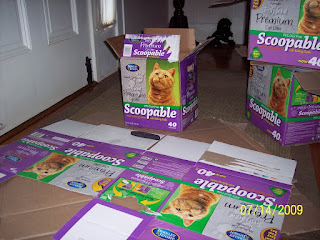
Step one is to save all the large cardboard boxes you find, in my case they are from deliveries and cat littler. And of course, the holiday season is a time of massive amounts of packaging, so use it for paths and other mulching projects rather than sending it all to the landfill!
Using a carpet knife, open up the boxes to flat. Be sure to take out the large staples or any other metal pieces. I also rip off all tape.
Step Two, either purchase a large pile of mulch, or if you're broke like me, talk the city chipper into dumping an entire truck full on the driveway!
Step three, mow your path with the mower blades set at "crew cut" blade height. Basically shave as close to earth as you can.


Before mowing After mowing
Remember, as always, to dress with safety as well as comfort in mind! And stay hydrated!
Step four, lay down the flattened cardboard along the path. I also use old phone books, junk mail, news print and other compostable stock.

This is mainly a great way to lessen the amount of compostable materials that are sent to our landfills. The added benefit of a nice path is, for me, secondary.
Step Five, start to haul the mulch out to the cardboard path and dump it. This is the most back breaking part of the entire process. The mulch must be at least 3 inches deep but deeper is better.

Final step, rake the path into shape desired. And walk on it often to tamp it down.

Paths that were put down a year ago are holding up quite well considering that I rarely mow, never water, and NEVER use any chemicals. The only way I maintain my pathways is to weed them by hand.
For the more active gardeners, these new paths should work for years! The best part is how simple it is to change the route of the path or eliminate them entirely! And if you do decide to turn part of the path into a planting bed, the compost value of the path ingredients will make for healthier soil. There could not be a more simple way to improve the soil, use up compostable materials that would otherwise wind up in landfill and create nice looking pathway!

You could take it a step farther and add some stepping stones, whatever you'd like!
Have you done something like this? Send me a photo or add a comment tell us how it worked out!
Step one is to save all the large cardboard boxes you find, in my case they are from deliveries and cat littler. And of course, the holiday season is a time of massive amounts of packaging, so use it for paths and other mulching projects rather than sending it all to the landfill!
Using a carpet knife, open up the boxes to flat. Be sure to take out the large staples or any other metal pieces. I also rip off all tape.

Step Two, either purchase a large pile of mulch, or if you're broke like me, talk the city chipper into dumping an entire truck full on the driveway!
Step three, mow your path with the mower blades set at "crew cut" blade height. Basically shave as close to earth as you can.


Remember, as always, to dress with safety as well as comfort in mind! And stay hydrated!
Step four, lay down the flattened cardboard along the path. I also use old phone books, junk mail, news print and other compostable stock.

This is mainly a great way to lessen the amount of compostable materials that are sent to our landfills. The added benefit of a nice path is, for me, secondary.
Step Five, start to haul the mulch out to the cardboard path and dump it. This is the most back breaking part of the entire process. The mulch must be at least 3 inches deep but deeper is better.


Paths that were put down a year ago are holding up quite well considering that I rarely mow, never water, and NEVER use any chemicals. The only way I maintain my pathways is to weed them by hand.
For the more active gardeners, these new paths should work for years! The best part is how simple it is to change the route of the path or eliminate them entirely! And if you do decide to turn part of the path into a planting bed, the compost value of the path ingredients will make for healthier soil. There could not be a more simple way to improve the soil, use up compostable materials that would otherwise wind up in landfill and create nice looking pathway!

Have you done something like this? Send me a photo or add a comment tell us how it worked out!
Subscribe to:
Posts (Atom)